• Home
  • Birding Tour Options
  • Special Birds of St Lucia and surrounds
  • St Lucia Birding blog
  • About Ian Ferreira
  • GALLERY
  • Contact us
  ST LUCIA BIRDING TOURS- IAN FERREIRA
Picture

St Lucia Birding Blog

ABOUT ST LUCIA BIRDING TOURS
Contact us

St Lucia Birding Update: October '23

30/10/2023

0 Comments

 
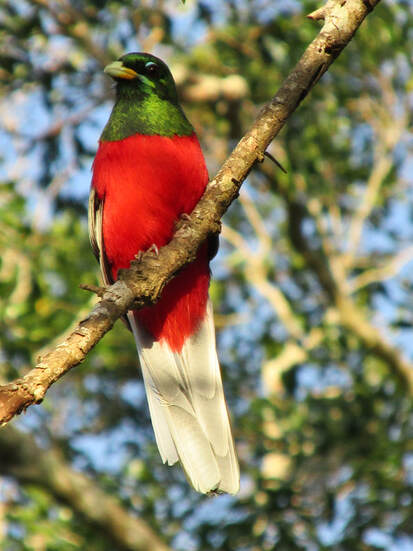
Narina trogon in sunlightMale Narina trogon seen on a bird walk during the month
​October is always a fantastic birding month in St Lucia. It has been an uncharacteristically wet October (350mm and counting) which has made birding challenging at times but the rain has topped up the wetlands nicely which bodes well for a great summer of wetlands birding. Also great for the continued opening of the estuary mouth. Another obstacle to birding at times has been the pesky elephants which block the road on the Eastern shores, Isimangaliso for hours!

Herd of elephants Isimangaliso wetlands park
Elephants blocking the road, Eastern shores, Isimangaliso
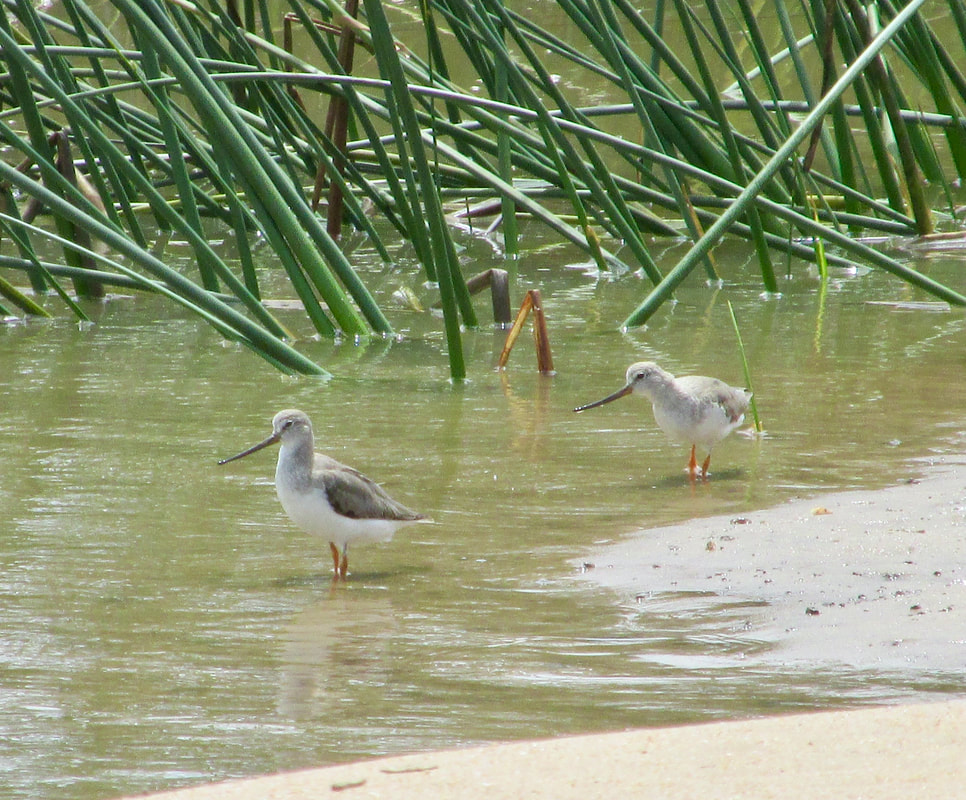
​Birding has been great at the estuary mouth with the Saunder's tern still present amongst Common, Little, Greater crested, Sandwich and the odd Whiskered tern. Waders and other waterfowl seen regularly at the mouth this month include Terek sandpiper, Bar-tailed godwit, Common sandpiper, Common-ringed plover, Grey plover, Marsh sandpiper, Curlew sandpiper, Common greenshank, Sanderling, Pied avocet, Eurasian whimbrel, Ruddy turnstone to name a few.
Terek sandpiper St Lucia estuary mouth
Terek sandpiper at the St Lucia Estuary mouth
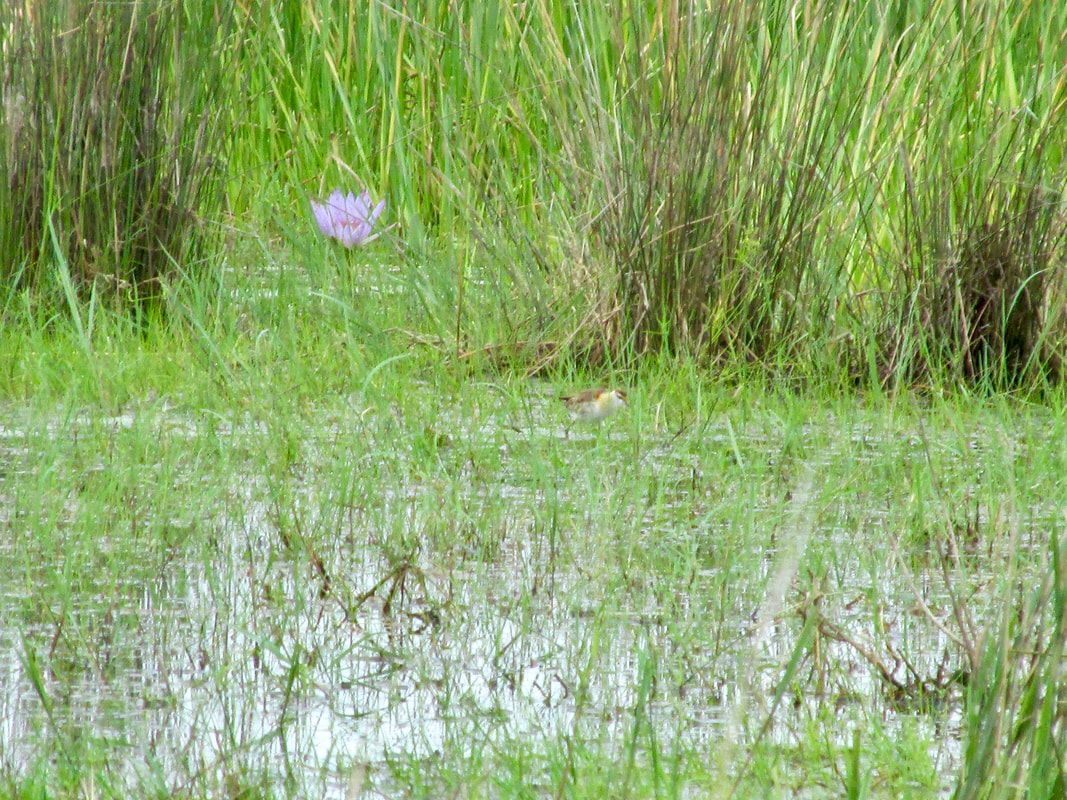
​The wetlands have been productive with regular sightings of Lesser jacana, Lesser moorhen, African pygmy-goose, White-backed duck, Intermediate egret, Great white egret, African jacana, White-faced whistling duck, Saddle-billed stork and at wetland edges: Collared pratincole, Pale-crowned cisticola and Rufous-winged cisticola, Fan-tailed widowbird, Yellow-throated longclaw. The Rufous-bellied heron have persisted.
Lesser jacana St Lucia
Lesser jacana in the wetlands close to St Lucia
In the grasslands we have seen the return of summer-visiting Common buzzard, Red-breasted swallow, Common (European) bee-eater, Blue-cheeked bee-eater and at the forest/grassland ecotone the return of African pygmy-kingfisher, Violet-backed starling, Broad-billed roller, Red-chested & Diederick's cuckoo.

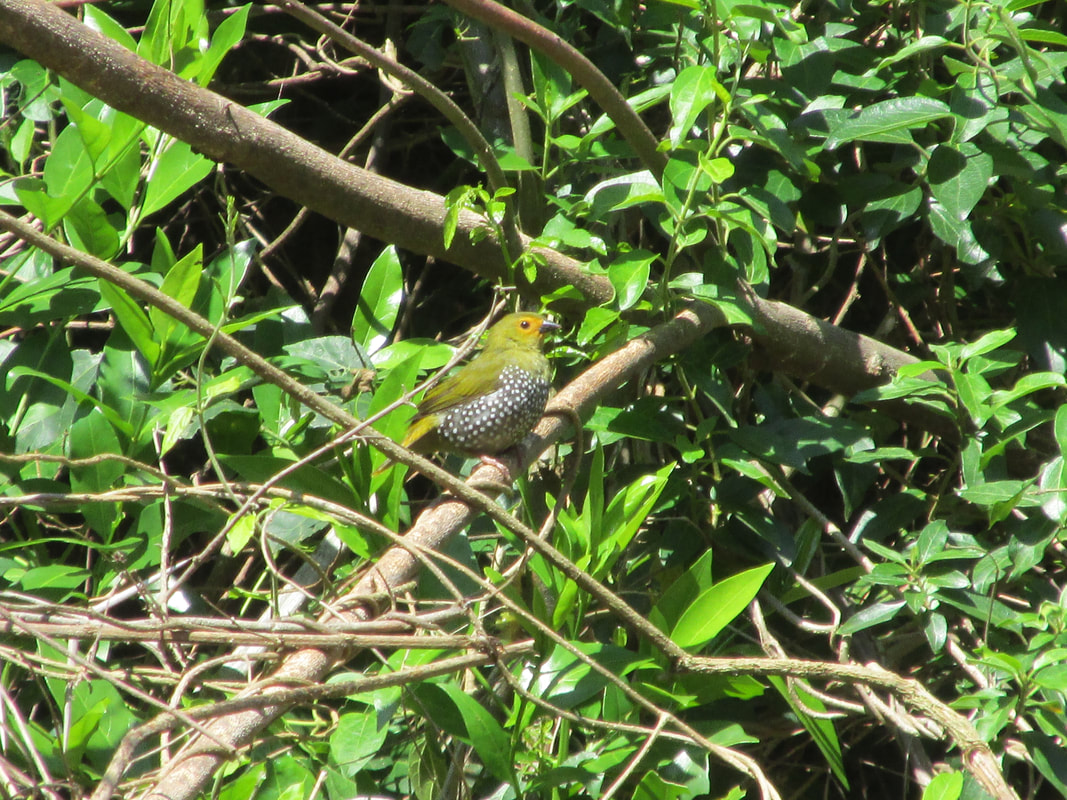
There has been lots of activity in the forest with birds more vocal and busy with the onset of breeding season. The Buff-spotted flufftail can be heard calling throughout the forest (especially on gloomy, rainy days and night) and we have been fortunate to find a couple of Narina trogon 'floating leks' of calling males. The Celtis leaf beetle larvae are no longer around which has made the African emerald cuckoo less abundant but there are still a few lingering amongst the Klaas' cuckoos. It has been a good month for seed-eaters with nice mixed flocks of Green twinspot, Red-backed mannikin and Grey waxbill in areas with good seed.
Green twinspot in sunlight
Green twinspot on a bird walk in St Lucia during the month
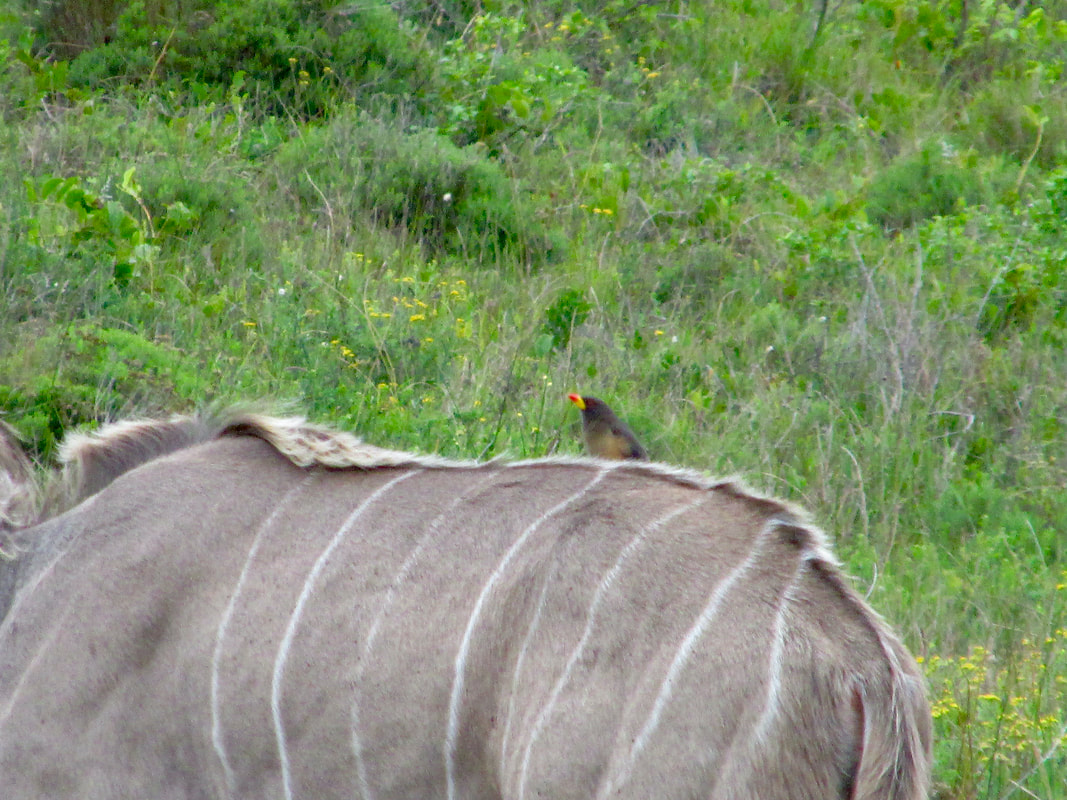
​A highlight this month was a sighting of Yellow-billed oxpecker on the Eastern shores,  Isimangaliso. This bird historically occurred in Zululand but went locally extinct due to cattle dipping. For many years the only place to see them has been the Northern parts of Kruger National Park. There have been a couple of sightings in Zululand in recent years (Phinda & Tembe Elephant Park) which might indicate the gradual  re-population of Zululand by these birds.
Yellow-billed oxpecker on Kudu
Yellow-billed oxpecker on Eastern shores, Isimangaliso
0 Comments


Leave a Reply.

    CONTACT US
    St Lucia Birding Tours KwaZulu Natal
Proudly powered by Weebly
  • Home
  • Birding Tour Options
  • Special Birds of St Lucia and surrounds
  • St Lucia Birding blog
  • About Ian Ferreira
  • GALLERY
  • Contact us